Deadly Nightshade After Closing Time

Comic Cavalcade was an anthology series that ran from 1942 until 1954, publishing super-heroes and other adventures for the first six years. Wonder Woman, the Flash, and Green Lantern were the headliners. DC has reprinted the first three issues as The Comic Cavalcade Archives, Vol. 1. (At 100 pages per issue, it’s still a pretty big collection!) I bought a copy, mainly for the Flash stories, and it finally arrived yesterday.

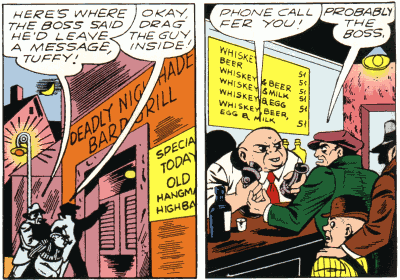
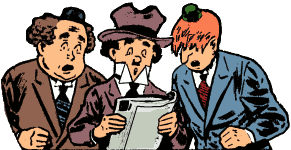
I read a few of the stories this afternoon, and these panels from the Green Lantern story in issue 1, “The Adventures of Luckless Lenore,” made me laugh out loud.

Two panels from Comic Cavalcade #1

Green Lantern’s sidekick, Doiby, has been trying to romance Lenore, whose “bad luck” seems to be engineered. At this point he’s been captured. I didn’t even notice the name of the bar the first time through, it was the menu that caught me off-guard. Continue reading

Blackest Night: Flash #1 Solicitation & Cover (Updated)

IGN has posted an interview with editor Eddie Berganza about upcoming Blackest Night tie-ins, including a cover gallery of all the Blackest Night-related covers coming in December.

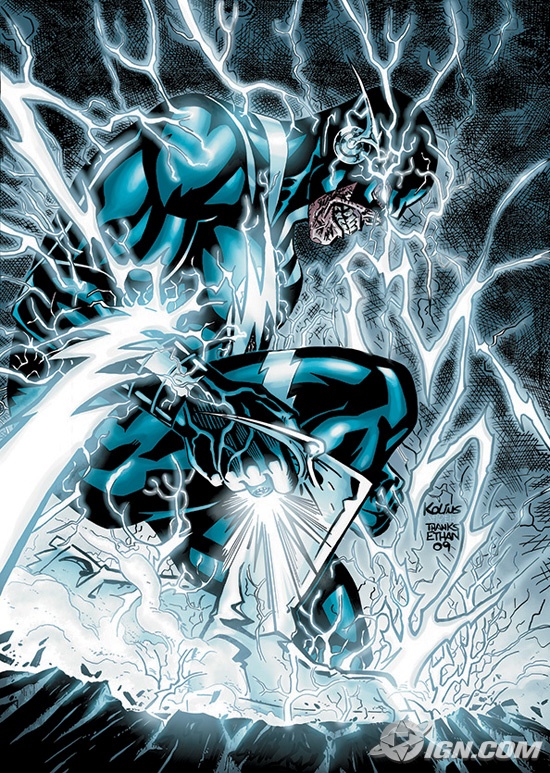
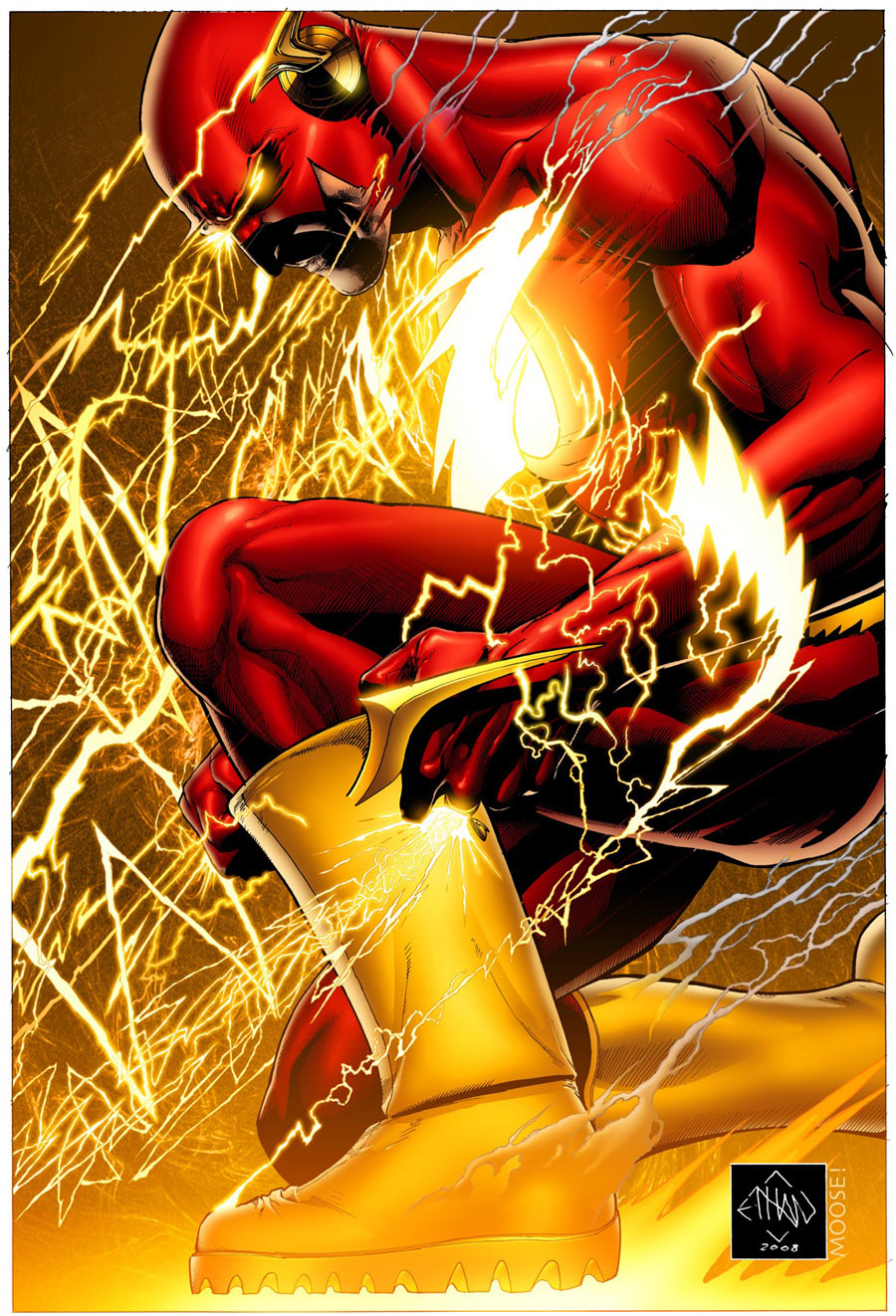
Including Blackest Night: The Flash, with a cover that looks…oddly familiar!

Blackest Night: The Flash Flash: Rebirth

If you look at the full-sized image, you can see “Thanks, Ethan” under Scott Kolins’ signature. I’ve got to say, Kolins looks like a perfect choice for this mini.

Full solicitations will be out on Monday.

So who wants to start taking bets on which Flash is in the reverse pose?

Update: I didn’t notice at first, but the second page of the article has the solicitation text for the issue:

Blackest Night: The Flash #1

Written by Geoff Johns
Art and cover by Scott Kolins
Variant cover by Francis Manapul

The Flashes of Two Cities – Barry Allen and Wally West – battle the undead Rogues. Will the legendary speedsters be able to handle the Black Lantern Rogues’ revenge?

Plus, witness the resurrection of Barry’s greatest enemy, the Reverse Flash in this hyper-speed miniseries event reuniting the fan-favorite Flash creative team of Geoff Johns and Scott Kolins!

This issue will ship with two covers. For every 25 copies of the Standard Edition (with a cover by Scott Kolins), retailers may order one copy of the Variant Edition (with a cover by Francis Manapul).

On sale December 2 – 1 of 3 – 32 pg, FC, $2.99 US

Notes: Francis Manapul, of course, was recently announced as the artist on the new, ongoing Flash series. And may I say I like the description of Barry and Wally as the “Flashes of Two Cities.”

Extinguishing a Speedster’s Smokes

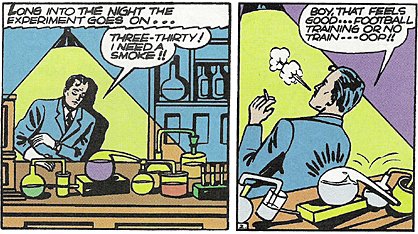
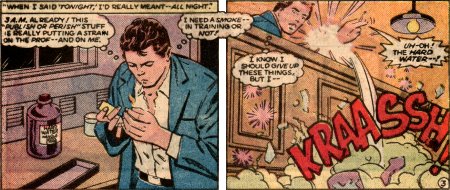
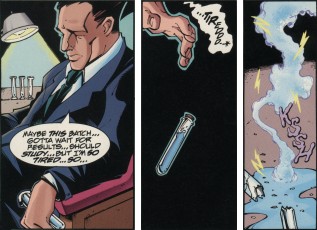
Comic Coverage posted a humorous look at the role smoking had in the Golden-Age Flash’s origin. Jay Garrick was working late, took a cigarette break, and knocked over a beaker of “hard water.” Interestingly, later retellings of his origin downplayed and finally deleted the cigarette.

First, here are the original 1940 panels from Flash Comics #1 (copied from Comic Coverage), showing grad student Jay Garrick taking time out for a smoke:

Jay Garrick pauses for a smoke

Four decades later, in 1986, Secret Origins #9 would retell his origin. Mindful of the details, but also concerned about modern sensibilities about health, writer Roy Thomas kept the cigarette break, but added Jay thinking, “I know I should give up these things…”

Jay really wants to quit

A decade later, the cigarette had disappeared completely. Flash Secret Files #1 (1997) featured a condensed retelling of all three (at the time) Flashes’ origins, and this time, Jay simply succumbed to the hour and nodded off, dropping the beaker.

Jay falls asleep on the job

(Via Crimson Lightning)

Originally posted at K-Squared Ramblings.

The Dimwits and the Thinker

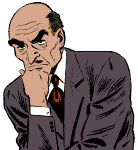
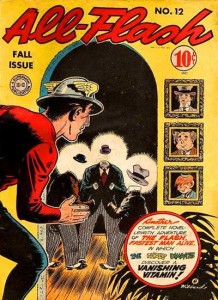
The Thinker (Golden Age)After almost 1½ years, my Golden-Age back-issue hunt finally netted a relatively cheap copy of All-Flash #12, the first appearance of the Flash villain, the Thinker. It’s an odd read, because the origin of the Thinker (a mob boss who plans his heists very meticulously) is interwoven with a slapstick story of the Three Dimwits.

All-Flash #12 (Fall 1943)The Thinker story is played more or less as a straight super-hero vs. organized crime story. I’d summarize it, but the Comics Archive has already written it up in their article on the Thinker [archive.org]. Now, imagine the first five paragraphs over there interwoven with a Three Stooges film and you’ll get the idea. The Dimwits end up buying a restaurant heavily in debt to the mob, and accidentally make salads out of an alien plant that make people turn invisible.

It’s incredibly silly, but it ties into the other half of the story: The original mob boss’ henchmen are caught robbing the Dimwits’ restaurant, so he calls in the Thinker to solve his problem before they can rat on him. And of course, once the Thinker takes over, he’s mighty interested in these salads that turn people invisible.

And yet, the feel is so completely different that it seems like two different stories.

The Three Dimwits: Winky, Blinky and Noddy

An unexpected discovery was a reference to the planet Karma, where the alien plant comes from. I’d seen two other references in other Golden-Age Flash stories, so it’s clearly part of the background mythos. This is one reason I’ve been looking for the source material. It’s relatively easy to find info on the leads, or the major villains, but the minor supporting characters who appear in three or four issues—Deuces Wilde, Evart Keenan, Dr. Flura, Ebenezer Jones—are mostly forgotten.

On a related note, while looking up the Thinker’s other appearances, I discovered that one of the non-Flash titles I’d been looking for, All-Star Comics #37, was reprinted in The Greatest Golden-Age Stories Ever Told—a book I already had. I felt bad that I hadn’t actually read the entire book, but that meant I could cross off two items from my wantlist instead of just one.

Originally posted at K-Squared Ramblings

One-Man Team

[Cover: Flash Comics #90: Nine Empty Uniforms]Something I’ve noticed as I read through various Golden-Age Flash Comics is a repeated subgenre in which the Flash plays an entire team. “Nine Empty Uniforms” (Flash Comics #90, 1947) is the first one I read, since it was reprinted in an 80-page Giant. The bad guys cause problems for a baseball team, so the Flash takes the place of every single player in the upcoming game.

As I’ve picked up comics from the 1940s, and the new Archive book, I’ve found more. In an untitled story from All-Flash Quarterly #1 (1941, reprinted in The Golden Age Flash Archive Volume 2), racketeers hassle a hockey team.The owner needs the money from the “Manley Cup” for an operation for his daughter, so when the racketeers force the players to sit the game out, the Flash steps in.

[Splash Page: All-Flash Hockey Game]

[Splash Page for Play of the Year]“Play of the Year” (Flash Comics #39, 1943) breaks with tradition a bit and instead of a sports team, the Flash replaces a troupe of actors. A rival producer tries to financially ruin one of Jay’s friends by preventing his play from opening, in this case faking a measles outbreak among the cast and putting them in quarantine. Once again, the Flash steps in and plays every single role, changing costumes and switching places faster than the eye can see.

The weird thing about these stories is that nowhere does anyone suggest that having a super-powered player—who isn’t even on your roster—just might be cheating. It goes all the way back to his first appearance in Flash Comics #1: Back in college, Jay Garrick was a football scrub. After the accident gave him super-speed, he convinced the coach to put him on the field so he could show off in front of his girlfriend, Joan.

Interestingly, later retellings of the Flash’s origin make it a point that he quit the team immediately afterward because staying would have given him an unfair advantage.

Originally posted at K-Squared Ramblings.

This Week (Sep 16): Blackest Night, JSA vs. Kobra

It’s hard to believe we’re only one week away from the final issue of Wednesday Comics! Also out this week are new issues of Blackest Night, JSA vs. Kobra, and Tiny Titans.

Wednesday Comics #11
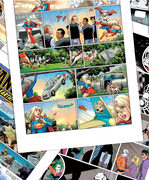
Wednesday ComicsWEDNESDAY COMICS, DC’s new, 12-issue weekly series, reaches its incredible conclusion in September. WEDNESDAY COMICS will arrive in stores folded twice to 7″ x 10″.

7″ x 10″, 16 pg, FC, $3.99 US

Blackest Night #3
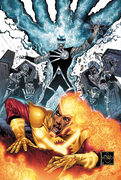
Blackest Night #3Written by Geoff Johns
Art and cover by Ivan Reis & Oclair Albert
Variant cover by Ethan Van Sciver
Sketch variant cover by Ivan Reis

As the dead attack in full force, Green Lantern is faced with an impossible decision and the scattered remains of the Justice League suffer a terrible loss. Who can stop the Black Lanterns? Why are they rising? And how can the Spectre help?

This issue will ship with three covers. For every 25 copies of the Standard Edition (with a cover by Ivan Reis & Oclair Albert), retailers may order one copy of the Variant Edition (with a cover by Ethan Van Sciver). For every 100 copies of the Standard Edition, retailers may order one copy of the Sketch Variant Edition (with a cover by Ivan Reis).

3 of 8 · 40 pg, FC, $3.99 US

JSA Vs. Kobra #4
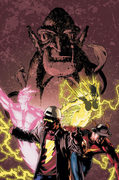
JSA vs. KobraWritten by Eric Trautmann
Art by Don Kramer & Michael Babinski
Cover by Gene Ha

The trail of Kobra leads the Justice Society of America to Fawcett City! Jason Burr may think that it’s safe to venture into former Shazam territory, but he’s about to learn that the JSA protects each other’s turf no matter what. And now that Burr has gotten them mad, there’s no holding the Justice Society back!

4 of 6 · 32 pg, FC, $2.99 US

Tiny Titans #20
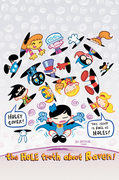
Tiny Titans #20Written by Art Baltazar & Franco
Art and cover by Art Baltazar

Raven conjures a black hole to get to school on time, and soon black holes are popping up everywhere! The Titans try to avoid them, but they keep falling in and ending up…who knows where? Also: black holes aren’t the only way to travel — some of the Titans discover the joys of jetpacks!

32 pg, FC, $2.50 US