April 4, 2011
If you happened to drop by the site on Friday, you may have noticed it looked…a bit different.

Yes, we re-branded Speed Force as Cobalt Blue Online, complete with multiple articles about the “Chain Lightning” villain. What with WonderCon starting and it being Flashpoint Friday, we thought about posting some joke news about the real villain behind Flashpoint, but the closest we got was Devin’s Cobalt Blue T-shirt design. Everything else we posted was true, speculation, or opinion…just a bit out of the usual topic range.
Cobalt Blue Online wasn’t the only blog to do this. A whole slew of comics character– and team-focused blogs reinvented themselves for a day to focus on Red Star, Vibe, the Osprey, Dreadstar, Marshall LAW, Valkyrie, B’Wana Beast…and the Top.
Update: The Idol-Head of Diabolu has a great recap of the whole group event.
Update 2: The Irredeemable Shag has another recap with screenshots of all the participating blogs over at FIrestorm Fan.
You can read all our April 1 articles, including the Flashpoint and WonderCon news, or just the Cobalt Blue (and related) posts.
Thanks to Devin, Greg and Lia for all their help, and the readers who dropped by for playing along – it was a blast!
April 1, 2011

Spoilers if you’re trade-waiting Flash: The Road to Flashpoint, but if you’ve read The Flash #9, you know that…
Read the rest of this entry »
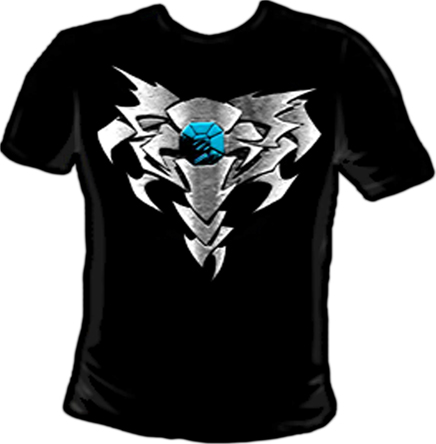
All right! With wild speculation concerning the identity of the individual(s) behind Flashpoint swirling about, we have a surprise exclusive being released first through VA Comicon coming up April 9, 2011 in Richmond, VA. The remaining t-shirts will be distributed through various outlets until they are gone.
Check it out:

The T-Shirt retails for $19.99 and will only be available in limited quantities.
I think the timing of the shirt is indicative of what I’ve known all along; Malcolm Thawne is behind Flashpoint and Barry Allen has no hope of stopping him.
Who plans on picking this baby up?
-Devin “Zoom” Johnson
Cobalt is an element obtained from the smelting of metallic ores such as cobaltite, copper, and nickel. The smelted form is a hard silvery metal with magnetic properties.

Cobalt-based blue pigments have been used since the Bronze Age (3000 BC) for glass, ceramics, jewellery, and paint. In modern times, the element is also used as part of a superalloy metal (which is a combination of metals) for diverse items like prosthetics, batteries, jet engines and turbines. A radioactive isotope of cobalt is commonly used in medical tests and to sterilize food and equipment.
Cobalt Blue is the name of a deep blue pigment used in ceramics, paint, glass, and even ophthalmology filters. It’s made from cobalt salts of alumina, and its popularity is in part due to its stability (meaning it doesn’t degrade or break down quickly). However, it’s toxic if ingested, much as I’d imagine Malcolm Thawne to be.
Cobalt Blue Tarantula

The Cobalt Blue tarantula is a spider species native to Myanmar and Thailand, notable for its iridescent blue legs, speed, and aggression. Somehow…this seems fitting. This site describes them as “a psychotic, high-strung burrowing species”, which makes them seem even less appealing.
There are many similarities between a blue tarantula and Malcolm Thawne: one is despised by most people and looks ridiculous. The other is a spider.

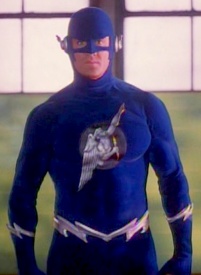
When it comes to the 1990 Flash TV series, true Cobalt Blue fans usually list the “Twin Streaks” episode at the top of their playlist.
Predating Blue’s first appearance by eight years, ”Twin Streaks” introduced Pollux, a clone of the Flash created from a sample of his blood.

Grown in a lab, Pollux was a prototype for what his creators hoped would be a line of super-soldiers. He also held some of the traits that would become associated with the Cobalt Blue character. While Rogues like Captain Cold, Trickster and Mirror Master appeared in modified versions of their comic book counterparts, Pollux mixed “reverse Flash” with evil-clone/twin and was driven by jealous rage.
While it would be a stretch to suggest that Pollux inspired writers Mark Waid and Brian Augustyn when creating Cobalt Blue, the raging jealousy and evil-twinness are something that both characters hold in common. Upon reaching a certain level of self-awareness, Pollux set out to annex aspects of Barry’s life, real and percieved, leading up to a super-speed showdown at the lab where he was weaned.
Pollux hit close to home for a lot of CB fans, and even inspired this loving tribute.
For more information on Pollux (TV’s Cobalt Blue!), check out this bio, and a review of the episode (from Crimson Lightning).

Most Flash readers, if they know about Cobalt Blue at all, know him as a new character introduced in the second half of the Mark Waid/Brian Augustyn run on The Flash in 1999. They might know that his link to Barry Allen was hinted at in The Life Story of the Flash and the first Flash Secret Files (both 1997), or that two Cobalt Blues appeared in the 1997 Speed Force special.
But Cobalt Blue’s origins can be traced all the way back to 1980!
Let’s return to the Bronze Age of comics. Read the rest of this entry »
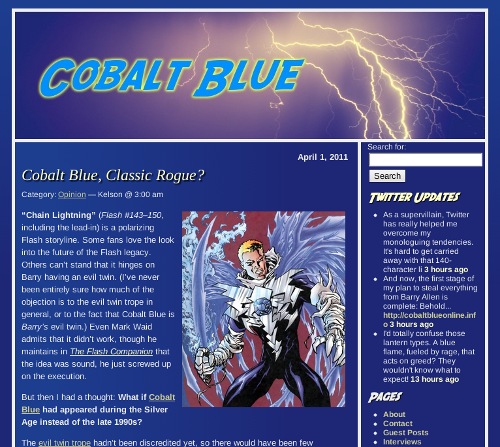
“Chain Lightning” (Flash #143–150, including the lead-in) is a polarizing Flash storyline. Some fans love the look into the future of the Flash legacy. Others can’t stand that it hinges on Barry having an evil twin. (I’ve never been entirely sure how much of the objection is to the evil twin trope in general, or to the fact that Cobalt Blue is Barry’s evil twin.) Even Mark Waid admits that it didn’t work, though he maintains in The Flash Companion that the idea was sound, he just screwed up on the execution.
But then I had a thought: What if Cobalt Blue had appeared during the Silver Age instead of the late 1990s?
The evil twin trope hadn’t been discredited yet, so there would have been few objections on that basis. And with Barry as the new, current Flash rather than a fond memory, there would be no sense that DC was tarnishing a cherished hero’s legacy.
Consider: The Flash’s opposite number, who could have had his life but for a twist of fate, who fights against the law instead of for it, who uses magic instead of science. There’s some solid appeal there. And being a conceptual opposite makes him fill a different role than the Reverse-Flash, who is basically the Flash, but evil. (Sort of like Savitar vs. Zoom)

Obviously the big 6-issue epics didn’t exist back then, but I can imagine Chain Lightning as a recurring type of story, where once a year or so, the Flash has to go into the future to help another future Flash fight that generation’s Cobalt Blue.
So…
Is Cobalt Blue that much worse a name than Captain Cold, Professor Zoom, Pied Piper or Abra Kadabra? (Admittedly, Waid says in the same interview that he wanted to use the name Wildfire, but DC nixed it.)
Is a literal evil twin that much harder to swallow than a clone (Inertia), a mimic who has been known to alter his appearance to match the original (Professor Zoom), the product of an imperfect duplicator ray (Bizarro), or an alternate universe version (Ultraman)?
Is the concept that much more hokey than a gang boss who dresses as a clown (Joker), a talking telepathic gorilla (Grodd), a villain who spins (The Top), runs around in a parka and snow goggles in the heat of summer (Captain Cold), or throws trick boomerangs (Captain Boomerang, of course)? Look at the reactions to Final Crisis: Rogues’ Revenge from people who don’t read The Flash. They were surprised to find that the Rogues were compelling characters. Readers outside the Flash fanbase look at the Rogues’ names, costumes, and powers and figure that they’re nothing but lame jokes, but when used properly, they transcend the cheese factor.
What do you think? Am I totally off-base here, or could Cobalt Blue have worked as a classic Silver-Age villain?
(Original post)
March 31, 2011

As it turns out, the Flash was right. The man removing his mask in the prologue to “Chain Lightning” wasn’t who Wally thought he was at first. But Cobalt Blue certainly looked like the classic Scarlet Speedster! (Flash v.2 #144, 1999).
Interestingly enough, the series returned to the cover concept less than a year later during the Dark Flash saga, reversing the lighting, the angle…and who was doing unmasking. (Flash v.2 #154, 1999) Read the rest of this entry »
October 28, 2008
“Chain Lightning” (Flash #143–150, including the lead-in) is a polarizing Flash storyline. Some fans love the look into the future of the Flash legacy. Others can’t stand that it hinges on Barry having an evil twin. (I’ve never been entirely sure how much of the objection is to the evil twin trope in general, or to the fact that Cobalt Blue is Barry’s evil twin.) Even Mark Waid admits that it didn’t work, though he maintains in The Flash Companion that the idea was sound, he just screwed up on the execution.
But this morning I had a thought: What if Cobalt Blue had appeared during the Silver Age instead of the late 1990s?
The evil twin trope hadn’t been discredited yet, so there would have been few objections on that basis. And with Barry as the new, current Flash rather than a fond memory, there would be no sense that DC was tarnishing a cherished hero’s legacy.
Consider: The Flash’s opposite number, who could have had his life but for a twist of fate, who fights against the law instead of for it, who uses magic instead of science. There’s some solid appeal there. And being a conceptual opposite makes him fill a different role than the Reverse-Flash, who is basically the Flash, but evil. (Sort of like Savitar vs. Zoom)
Obviously the big 6-issue epics didn’t exist back then, but I can imagine Chain Lightning as a recurring type of story, where once a year or so, the Flash has to go into the future to help another future Flash fight that generation’s Cobalt Blue.
So…
Is Cobalt Blue that much worse a name than Captain Cold, Professor Zoom, Pied Piper or Abra Kadabra? (Admittedly, Waid says in the same interview that he wanted to use the name Wildfire, but DC nixed it.)
Is a literal evil twin that much harder to swallow than a clone (Inertia), a mimic who has been known to alter his appearance to match the original (Professor Zoom), the product of an imperfect duplicator ray (Bizarro), or an alternate universe version (Ultraman)?
Is the concept that much more hokey than a gang boss who dresses as a clown (Joker), a talking telepathic gorilla (Grodd), a villain who spins (The Top), runs around in a parka and snow goggles in the heat of summer (Captain Cold), or throws trick boomerangs (Captain Boomerang, of course)? Look at the reactions to Final Crisis: Rogues’ Revenge from people who don’t read The Flash. They were surprised to find that the Rogues were compelling characters. Readers outside the Flash fanbase look at the Rogues’ names, costumes, and powers and figure that they’re nothing but lame jokes, but when used properly, they transcend the cheese factor.
What do you think? Am I totally off-base here, or could Cobalt Blue have worked as a classic Silver-Age villain?
(Expanded from a remark I posted on Twitter earlier, itself condensed from a post on Comic Bloc in response to Heatwave the Rogue’s assertion that Cobalt Blue is the Mopee of the modern era.)