
October 1, 2008

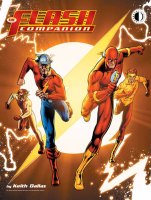
One interesting surprise buried in Flash TV Series, CBS wanted to cast The Flash Companion is the fact that during the development for the 1990 Jack Coleman as Barry Allen. Yes, Heroes‘ very own Noah Bennet, the man with the horn-rimmed glasses.
From the interview with Danny Bilson and Paul De Meo:
BILSON: You know what? The network offered the role to Jack Coleman, who used to be on Dynasty, and he wouldn’t do it because he wouldn’t wear the suit. That’s what I remember.
So what might Coleman have been like as Barry?
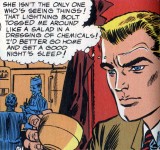
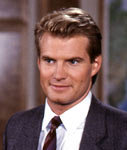
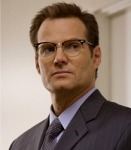
Here’s Barry Allen from his first appearance in Showcase #4, alongside a picture of Jack Coleman from Dynasty a couple of years before The Flash went on the air, and another picture of him as today’s audience would recognize him.

Well, he certainly would have looked the part!
Also, John Wesley Shipp was Bilson & De Meo’s second choice for the role. Their first was Richard Burgi, who went on to lead the duo’s later show, The Sentinel. CBS went with Shipp because, in the network head’s words (according to De Meo), “I can see that guy on a lunchbox.”
Image sources: Barry Allen scanned from The Greatest Flash Stories Ever Told, art by Carmine Infantino and Joe Kubert. Dynasty photo via Heroes The Series. Heroes photo via BuddyTV.
September 8, 2008
In the previous post I made a joke about Mackenzie Ryan being the new Flash. I should probably explain.
During Crisis on Infinite Earths, DC made the decision to kill Barry Allen before they had figured out how to replace him. Many ideas were suggested, and the one that got the farthest was a proposal by Len Wein and Marv Wolfman for a new character with no link to Barry except the name.
A brief note in Amazing Heroes Preview Special #2 (1986) described the proposal:
- Mackenzie “Mac” Ryan was a lab tech at STAR Labs, linked to established character Jenet Klyburn.
- He was a single father with a daughter between 8 and 12 years old.
- Instead of super-speed, he had the ability to manipulate energy fields (light, sound, etc.)
Ultimately, DC decided to promote Wally West instead. Oddly enough, Mackenzie Ryan actually gets a brief mention in canon, during a phone conversation with Klyburn in The New Teen Titans #19 (written by Marv Wolfman), which gave his daughter’s name as Jamie.
Further reading:
The Flash Companion has an article about “The Unused Flash.” Comic Book Urban Legends Revealed #126 points out similarities between Mackenzie Ryan’s powers and those of the Tangent Flash. Titans Tower collects interview fragments about trying to set up the new Flash.
August 11, 2008
This week’s Lying in the Gutters includes an excerpt from The Flash Companion. It’s a later segment from the same Mark Waid interview that I previously posted here (on creating Impulse). In this segment, Waid discusses the editorial directive from above that changed Impulse to Kid Flash, and then Kid Flash to the Flash.
It’s about 2/3 of the way through the column, the section labeled “Flashburning Bridges.”
July 30, 2008
TwoMorrows’ book, The Flash Companion is now available! It debuted at Comic-Con last week, Amazon orders have been shipping, and it’s been showing up in stores.
Here’s one more excerpt to round out the quartet of Scarlet Speedsters. As with the others, it’s posted here with permission of the book’s main author, Keith Dallas.

Mark Waid: Running on Impulse (excerpt)
By John Wells
WELLS: Why call him “Impulse,” rather than “Kid Flash”?
WAID: Because it was a perfect name. We didn’t want to call him “Kid Flash” because it sounded a little corny, and I still think it sounds a little corny. “Impulse” is the perfect confluence of a character’s name, his powers, and his personality, all in one word. And once we had the name — and I can’t swear it wasn’t Kurt Busiek’s suggestion — it completely summed up the character. Thought to deed in one motion without all those pesky synapses getting in the way.
WELLS: [laughs] It really did. Whose idea was that hair?
WAID: I think it was Humberto’s. Pure Humberto [Ramos]. Mike Wieringo had done the initial costume design, without the mask, but boy, Humberto went to town with the look, with the giant hair and the gigantic feet.
WELLS: Now kind of earlier on, you’d had the Tornado Twins revived in 1991’s Legion of Super-Heroes #18 and immediately had them executed by the Dominators.
WAID: [chuckles] “You” meaning “the Legion editors and writers after you left staff.” Don’t look at me, man.
WELLS: And later on, their DNA created a female speedster called Rush. And meantime, Don Allen was said to have been survived by his wife, Carmen Johnson and their two-year old son, Barry II. So what came first? You said you had the teen speedster idea for the Justice League story []earlier in the interview], was that before or after?
WAID: A little after, so that would have been the “Barry II” that we were talking about at the time, I suppose. But at that point, we were going to reboot the Legion with Zero Hour, so I knew that all bets were off in terms of Rush and those characters. It also freed up the name “Impulse,” which I believe was the codename of —
WELLS: Kent Shakespeare.
WAID: Kent Shakespeare, yeah.
WELLS: Iris brought Bart back to the 20th Century in the hope that Wally could cure her grandson, but she also wanted Wally to rein in Bart and train him in the use of his powers. Why was that not going to work?
WAID: It was so not going to work because Bart and Wally just hated each other. Wally saw in Impulse all of his own negative characteristics, so it put his teeth on edge.
WELLS: On the other hand, Max [Mercury] and Bart did work out pretty well, even though they didn’t think it was going to. How did you see that relationship?
WAID: We went into the Impulse series not sure who the mentor figure was going to be. And for a long time, I think we were talking about it being Jay, but Jay has his wife, Joan, and I don’t know what they could have brought to the series that wouldn’ t have been Ma and Pa Kent. Making Bart’s mentor Max, somebody who was so dry and so much the opposite of Bart, was too much comic potential to let go.
(more…)
July 24, 2008
I had a chance to check out The Flash Companion at the TwoMorrows booth today, and it looks really great. I also attended the TwoMorrows panel, where they talked about current and upcoming projects, and author Keith Dallas talked about the book.
John Morrow told a funny story about how, last night, Mark Waid showed up at the booth and wanted to buy a copy. They pointed out that he didn’t need to, they were sending him a comp copy, and he said, no, you don’t understand, I need to read this in my hotel room, tonight! They gave him his free copy then and there.
After the panel I finally got to meet Keith Dallas, Bill Walko, and someone else whose name already escapes me (sorry!) [Edit:] Jim Kingman. Keith is doing a signing at the TwoMorrows booth until 5:00.
July 23, 2008
The following is a 1-page excerpt from the new book, The Flash Companion. The full interview appears in the second section of the book. It is printed here with permission of the book’s main author, Keith Dallas.
The Flash Companion will be available at the TwoMorrows booth at Comic-Con International this week, and should arrive in stores either next week or the week after. Orders through Amazon are shipping now.

Mike Baron: Wally West’s Fast Living (excerpt)
By Keith Dallas
DALLAS: It seemed pretty obvious that during your run on Flash you were avoiding the classic Flash Rogues. No Captain Cold, no Captain Boomerang, no Mirror Master. Instead you introduced some completely new villains… with the exception of Vandal Savage. What particular reason did you have for starting this Flash re-launch with Savage as the villain?
BARON: I can’t exactly recall, but for starters, he’s a great villain. It may also have been that I wanted to have some continuity in that first issue between Barry Allen and Wally West.
I would like to do a lot more with Kilg%re. That’s my main character that I created for Flash. He and the Chunk.
DALLAS: What was it about Kilg%re that you liked?
BARON: He encapsulates a number of science fiction ideas that lend themselves to exciting story-telling. Dark Horse took a stab at it with a movie called Virus, which is very similar in idea to Kilg%re. It wasn’t the greatest movie in the world. It starred Jamie Lee Curtis.
DALLAS: I remember that movie.
Now what was it about Chunk that you liked?
BARON: He was kind of a projection of me. The ultimate nerd.
DALLAS: [laughs] It didn’t take you long to show that Chunk wasn’t a true villain.
BARON: No, he was just an outsider who wanted to belong.
DALLAS: Is that a sentiment that you felt perhaps the readers could connect to?
BARON: Oh, yeah!
DALLAS: The other two villains you introduced during your run on Flash were Speed Demon — the steroid monster gone crazy — and Blue Trinity — the Russian Soviet speedsters. (more…)
The Flash Companion debuts at Comic-Con International in San Diego this week. Also, the trade for Countdown to Adventure is out with a couple of alternate-reality Flashes.
The Flash Companion
The Flash Companion details the publication histories of the four heroes who have individually earned the right to be declared DC Comics’ “Fastest Man Alive”: Jay Garrick, Barry Allen, Wally West, and Bart Allen.
With articles about legendary creators Shelly Mayer, Gardner Fox, E.E. Hibbard, Julius Schwartz, Robert Kanigher, John Broome, Ross Andru, Irv Novick and all new interviews of Harry Lampert, Carmine Infantino, Cary Bates, Alex Saviuk, Mike W. Barr, Marv Wolfman, Mike Baron, Jackson Guice, Mark Waid, Kolins, among others, The Flash Companion recounts the scarlet speedster’s evolution from the Golden Age to the 21st century.
Also featured are “lost covers,” never before published commission pieces by Flash artists throughout the decades, a Rogues Gallery detailing The Flash’s most famous foes, a tribute to late artist Mike Wieringo by Mark Waid, a look at the speedster’s 1990s TV show, and “Flash facts” detailing pivotal moments in Flash history.
[Note: check out this blog's Flash Companion coverage for previews, podcasts and more.]
Written by Keith Dallas, with a cover by Don Kramer (Detective Comics, JSA) with colors by Moose Baumann (Green Lantern).
Countdown to Adventure TPB
Collecting the 8-issue miniseries spinning out of 52, featuring the adventures of Animal Man, Starfire, Adam Strange, the mysterious new character Forerunner and more! Can they prevent San Diego from being wiped out by the enigmatic Healers?
[Note: This book features several alternate-reality Flashes, including Lady Flash of the Conjurers of Earth-33, and the Nazi speedster of Earth-10.]
Written by Adam Beechen; Art by Eddy Barrows and Julio Ferreiro and others; Cover by Ivan Reis and Oclair Albert
Justice League of America #23
It’s all-out Amazon fury against Amazo! Wonder Woman is the last Leaguer standing against the souped-up android — and the prize is Red Tornado’s body!
Written by Dwayne McDuffie; Art and cover by Ed Benes
July 22, 2008
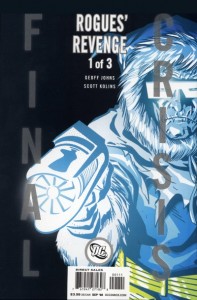
1. Lying in the Gutters comments on Rogues’ Revenge:
If “Captain Britain” is the “Secret Invasion” spinoff that’s more entertaining than the series it spins off from, then “Rogue’s Revenge” is the “Final Crisis” spinoff that you can actually understand and enjoy, even if you have no idea of the continuity and characters it refers to?
2. CBR has an article on True Believers, the Marvel mini-series by 1970s Flash writer Cary Bates, including 6 pages of preview art. The first issue comes out next week.
3. Flash Companion author Keith Dallas has posted his San Diego schedule:
On Thursday from 3-4PM I’ll be a panelist on “TwoMorrows Publishing Today” in Room 10.
I’ll also be at the TwoMorrows booth (#1215) autographing The Flash Companion during these dates and times:
Thursday, 4-5pm
Friday, 3-4pm
Saturday, 11-12pm
July 19, 2008
Flash Companion author Keith Dallas has appeared on several podcasts in the last few months.
May 1: TwoMorrows Tune-In #8
May 14: Views from the Longbox Episode #39: The Keith Dallas Conversation Part 1
May 28: Views from the Longbox Episode #40: The Keith Dallas Conversation Part 2
July 9: Alter Ego Comic Cast #107 with Keith Dallas and Jim Beard
Also, it turns out that while TwoMorrows will have copies to sell next week at Comic-Con International in San Diego, it probably won’t hit stores until July 30.
July 16, 2008
The following is a 1-page excerpt from the upcoming book, The Flash Companion. The full interview appears in the second section of the book. It is printed here with permission of the book’s main author, Keith Dallas.
The Flash Companion is scheduled for a July 23 release.

Cary Bates: A Scarlet Speedster for the Seventies (excerpt)
By Jack Scott
SCOTT: Was [the serialized storytelling] your decision or a DC editorial decision to change how the Flash stories were being written? I’m wondering if there was a DC mandate to become more like its competitor Marvel Comics.
BATES: I don’t think going the serial route was an official mandate or anything. It just seemed like a natural way to proceed at the time, dictated by the story-lines more than anything else. It first began the last couple of years Julie [Schwartz] was editing the book, in the form of 2-4 issue arcs (like the Golden Glider stories). And with Ross [Andru] and Ernie [Colon], who were more Marvel-oriented guys, the full-on serialized mode pretty much became the status quo. Although I do recall a temporary return to more self-contained stories for awhile, when Mike Barr was editing and Carmine [Infantino] first returned to the book.
SCOTT: Speaking of the co-creator of Barry Allen/Flash, Carmine Infantino returned to pencil the book with issue #296 in 1981. How did it feel to get to work with one of the original creators of the book?
BATES: As I’ve mentioned, when I was growing up, Carmine’s distinctive artwork made a huge impact on me as a fan (and an aspiring amateur artist), so it was a great thrill to finally be working with him on Flash. Carmine and I always got along well, but when I first met him, he had given up his drawing board to serve as DC’s editorial director, although he still laid out most of the covers for other artists. In 1976, after Warners hired Jennette Kahn to take over that job, Carmine went back to penciling, and for a year or two he was working almost exclusively for Jim Warren on books like Creepy and Eerie. Ironically, it was here where our first collaborations took place, as I was writing occasional Warren stories for Louise Jones, who was the editor at the time. I think Carmine and I must have done 3 or 4 one shot horror stories that have long since been forgotten.
SCOTT: How far did you plot out stories? (more…)